The Quote-to-Cash Process: Why Most B2B SaaS Gets It Wrong
Quote-to-cash is not a sales problem or a finance problem. It is what happens in between, and that is usually where the revenue disappears.
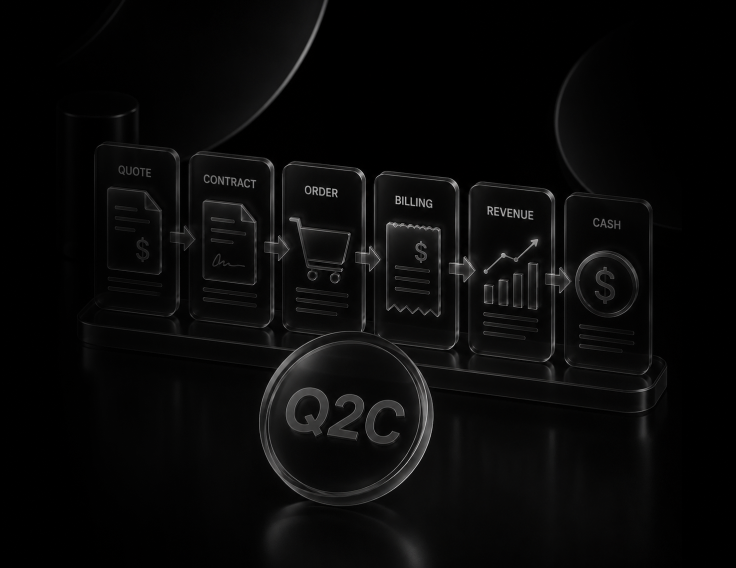
Closed-won is not the finish line. It feels like one, the deal is in the CRM, the confetti animation played, everyone moves on to the next opportunity. But the money is not in the bank yet, and everything that happens between the signature and the cash is where a surprising amount of revenue quietly disappears.
That gap has a name: quote-to-cash. It covers configuring the deal, pricing it, quoting it, contracting it, billing it, invoicing it, and finally collecting and recognizing the revenue. Most companies have a process for each of those steps individually. Very few have one continuous process that connects all of them, and that gap is exactly where the leakage happens.
The uncomfortable truth about revenue leakage:
it is not usually a fraud problem or a big mistake. It is dozens of small handoffs where information gets re-typed, re-interpreted, or simply lost between one system and the next.
42%
of companies report experiencing meaningful revenue leakage, according to MGI Research
1-5%
of annual revenue typically lost to preventable quote-to-cash errors
40%
faster deal cycles reported by companies running a connected quote-to-cash process, versus disjointed systems
Why "just add more tools" does not fix it
The instinctive response to a broken quote-to-cash process is to buy a tool for the piece that hurts most. A CPQ tool for the quoting bottleneck. A billing platform for the invoicing mess. A CLM tool for the contract chaos. Each purchase solves its own corner and leaves the handoffs between them exactly as broken as before.
"You do not fix a leaky pipe by buying a better bucket. You fix the pipe."
What a connected process actually looks like
The goal is not a single monolithic piece of software that does everything. It is a process where the data created at each stage flows automatically into the next one, so nobody is re-entering information that already exists somewhere.
In practice, that means:
- The terms a rep negotiates in a quote become the terms in the signed contract, without manual re-typing
- The signed contract automatically configures the billing schedule, including ramps and usage components
- Invoices generate directly from that billing configuration, so what the customer sees always matches what they signed
- Payments reconcile automatically against the correct invoice, keeping collections focused on accounts that actually need follow-up
Author
Jordan Lee
Head of Revenue, Module